Sleep and Mental Health: Scientific Evidence on the Brain, Emotions, and Well-Being


Have you ever noticed how restless sleep at night can make your next day feel heavy and tiring? Well, many people consider sleep as a physical resting state, but it is much more than that. Our sleep quality shapes how our brain manages emotions, stress, responsibilities, decisions, thoughts, challenges, and maintains mental balance throughout the day. Furthermore, it also plays a significant role in the occurrence of mental health disorders, especially anxiety, depression, and constant mental fatigue. Still, many people push sleep aside, treating it as something they can catch up on later.
According to the National Heart, Lung, and Blood Institute, sleep deprivation can lead to major health and mental conditions, and in worst-case scenarios, even death. Hence, whenever sleep is neglected, physical and mental health often follows. Thus, here we are bringing the concept of “connection between Sleep and Mental Health” under the spotlight to understand the link between them in order to lead a healthy and emotionally balanced life.
Table of Contents

Impact of Sleep on Mental Health and Emotional Stability
We all have heard a famous saying about people in a bad mood: “They woke up on the wrong side of the bed!” Well, the saying is true to a greater extent as the link between sleep and mood is surprisingly deep. Sleep has quite a comprehensive association with mental health and has demonstrated its link to depression, anxiety, bipolar disorder, and other mental health conditions. Furthermore, it may also lead to health risks and chronic diseases.
Sleep disorders such as insomnia and Obstructive Sleep Apnea (OSA), a condition characterized by repeated pauses in breathing during sleep, can significantly disrupt sleep cycles. These interruptions prevent the brain from reaching deep, restorative sleep stages, leaving individuals mentally exhausted and emotionally vulnerable. As a result, poor sleep quality can worsen existing mental health challenges and even trigger new emotional difficulties. Therefore it is important to prioritize healthy sleep habits, as such habits are essential for maintaining emotional stability, mental clarity, and overall psychological well-being.

Psychological Effects of Sleep Deprivation on Thought Processing and Judgment
Many people consider sleep a luxury – a little downtime for your brain. However, they don’t really know the real importance of sleep for mental health and well-being. They only assume a good sleep will make them feel good, while a poor one will make them feel tired and drowsy all day. However, sleep quality has much more profound effects on one’s mental health. Both sleep and mental health are extensive concepts, and various researches are being conducted to study their relationship more extensively. Here, we have mentioned the common negative mental effects of sleep deprivation. So, let’s take a quick look at them!
- Sleep deprivation leads to lower alertness, making it difficult to focus and concentrate.
- It also affects your ability to perform technical tasks that require logical reasoning and complex thinking processes.
- Managing decision-making situations also becomes difficult due to confusion and a lack of focus.
- Poor sleep quality can also negatively impact the memory, making it weak and easily impaired.
- Difficulty in learning is another side effect of poor sleep. As you can’t focus or concentrate, you’ll face troubles in understanding and processing new information.

Effects of Lack of Sleep on Daily Functioning and Behavioral Performance
The biggest and most significant outcome of sleep deprivation and mental health is the slow reaction time. Your focus, understanding, learning, behavior, and decision-making skills will be impacted, which will lead to slow reactions and less effectiveness in your daily routine tasks.
For example, you had a poor sleep last night, and now you are driving to your office. Your attention drifts, and in a brief moment, you couldn’t restore your focus quickly. Now, the traffic signal changes take time to register in your mind, and as a result, your brain slowly reacts to the sudden changes on the road. Not only this, but muscle memory-based activities like braking and speeding up feel like extra effort.
Well, these delays might sound simple and minor, but they increase the chances of accidents on the roads. Hence, sleep deprivation is not only a risk to your mental and physical health, but it can also lead to glitches and errors in your daily tasks, even getting you into life-threatening situations.
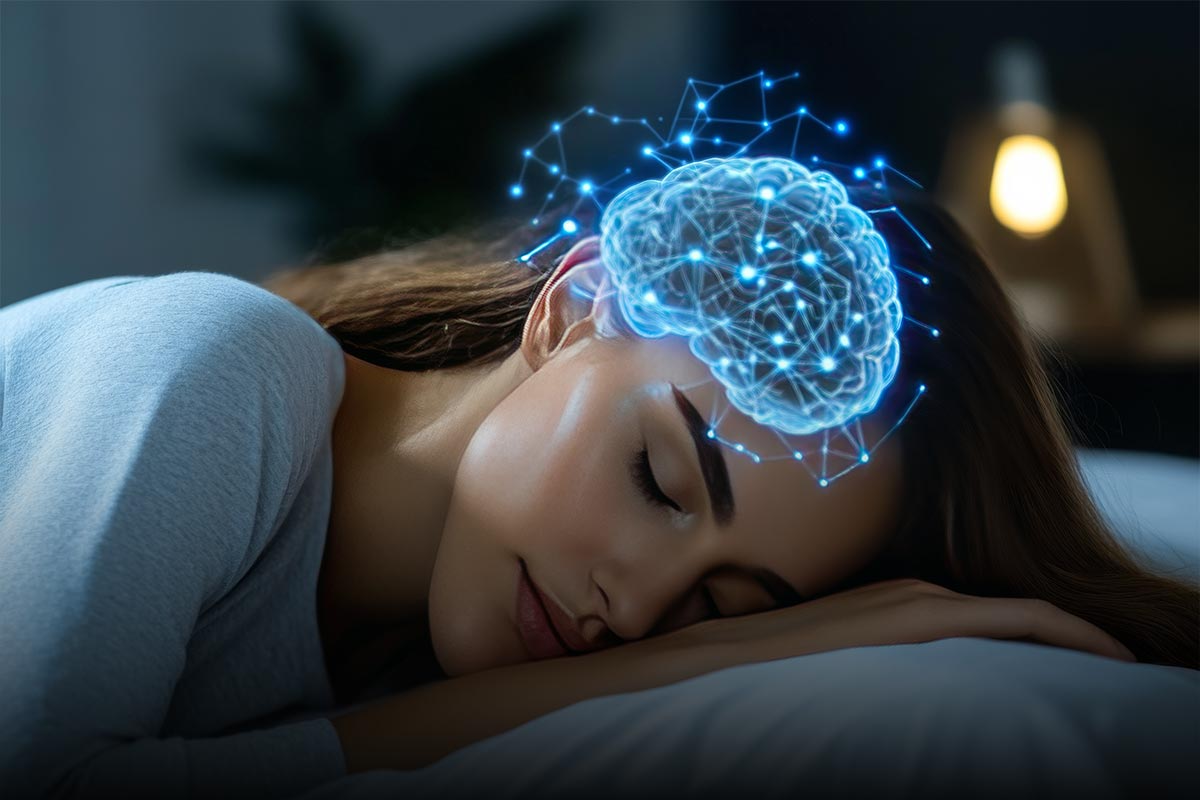
Lack of Sleep Side Effects on the Brain and Neural Communication
Sleep quality has a significant impact on brain and neurological health. Not only does it decrease the risks of chronic diseases, but it also strengthens the brain and helps it in functioning properly.
During sleeping, our brain mainly performs two functions, which are brain detoxification and neuro plasticity.
Brain Detoxification:
Brain detoxification is a process of comprehensive cleaning of the brain. Waste products like harmful proteins and toxins are removed with the regulation of the lymphatic system. This process is important as it lowers the risks of extensive neurodegenerative diseases.
Neuroplasticity:
Neuroplasticity is the process of the brain forming new connections and creating memories. Thus, sleep quality directly impacts the effectiveness of this process. Poor sleeping quality can cause memory impairment and difficulty in processing information.



Sleep Deprivation and Mental Health Disorders in Clinical Research
Researches have consistently shown that sleep disorders and disturbances are closely linked to the incidence of mental disorders in people. According to a large-scale study by the Center of Disease Control and Prevention, people who experience poor quality or inadequate sleep, less than 6 hours a day on average, are 2.5% more likely to develop mental disorders.
A comprehensive study by the National Library of Medicine shows the deep relation between insomnia, a condition of lack of sleep, and mental disorders, including anxiety, depression, eating disorders, PTSD, and other conditions. Another study by the National Library of Medicine proves that improving sleep quality significantly leads to improvement in mental health. A good sleep is like a magical portion for your brain and body. Thus, in order to improve quality of life and mental health, it is important to give special attention to the quality of sleep.

Lack of Sleep and Anxiety Disorders Linked to Nervous System Dysregulation
Anxiety disorder is a mental health condition characterized by persistent worry or fear about a situation. It can go beyond the normal mental stress levels and may cause interruptions in everyday activities like school, jobs, household chores, and family relationships.
The insufficiency of sleep and anxiety have a complex connection. Suppose a person is regularly skipping quality sleep; their body’s stress management system (the system that manages our response to stress and dangerous situations) experiences an imbalance. This means that the body is now in a constant “High Alert” position, although there is no real harm, threat, or potential risk. Well, this loop doesn’t end here. This constant alertness boosts the stress hormones, named “Cortisol” in the body, which makes it difficult for the brain to cool down and relax. Thus, the brain becomes ineffective at regulating emotions or focusing on everyday tasks. This non-functionality also makes the symptoms of anxiety worse.
In short, the lack of sleep triggers the anxiety, and anxiety results in insomnia and sleep disturbance, both sides of the same coin, no matter what.

Sleep and Depression as Interconnected Mental Health Conditions
Depression is characterized by constant feelings of sadness and hopelessness, often followed by a variety of emotional, mental, and physical challenges. It can create persistent disappointment and cause disruption in everyday routine tasks.
Sleep and depression have a very tangled relationship. People suffering from depression may experience insomnia at night or have excessive sleepy feelings during the daytime.
Similar to anxiety, depression, and sleep are also bidirectional. People with depression will experience troubles in sleeping, while poor quality sleep is itself a leading cause of depression.
According to a study, about 40% of people with insomnia are diagnosed with clinical depression. Whereas, 80% of the patients with Depression experience bouts of insomnia and poor sleeping quality. People with depression may experience insomnia and hypersomnia during the night and daytime, back and forth.

Mental Effects of Sleep Deprivation on Mood, Motivation, and Irritability
Mood swings are one of the leading side effects of lack of sleep. You will feel fatigue and weakness all day long along with irritability and anger, not to forget about the lack of focus, concentration, difficulty in understanding information, and taking decisions, and the cause behind all of this is the inability of the brain to manage stress.
According to a social experiment, sleep-deprived people are also the ones who are less likely to exercise, eat healthy food, pursue their hobbies, have sex, or take part in leisure activities. Their tired minds are unable to focus or manage the other aspects of their life. Their life is just bound to mental disorders and associated feelings and experiences. Thus, it is important to fix your sleeping schedule and make arrangements for a good-quality sleep. However, if you are experiencing insomnia or hypersomnia and are unable to fix your sleep, then it is time to consult a mental health expert immediately. At Midi Cites Psychiatry, we have a team of highly skilled psychotherapists who provide custom-curated plans and effective treatments.
Frequently Asked Questions
Yes, excessive sleeping, medically known as hypersomnia, is an abnormal condition that requires immediate expert help. It can disrupt the natural sleeping rhythm and may be linked to depression and persistent low mood.
Absolutely! Improvements in sleeping habits can significantly contribute to positive therapy and counseling outcomes. Sleeping balances the body’s stress management system and brings mental clarity, making the brain effectively process emotions and experiences.
To a greater extent, yes. Children and teenagers are more likely to experience difficulties with cognitive mental activities. Whereas the adults may experience mood swings or severe mental health disorders. Sleeping troubles in old people may result in affecting memory.
Unfortunately, yes. Lack of sleep results in constant fatigue, irritability, anger, and poor stress management. And in worse scenarios, even anxiety, depression, and PTSD. Thus, these emotional imbalances may also lead to a lack of communication skills and less empathy. Hence, it can lead to misunderstandings and conflicts with your family, friends, and loved ones, negatively impacting your social life.
Conclusion
The connection between sleep and mental health is extensive yet limitless. From leading to severe mental health disorders to causing conflicts in your relationships, it is a significant part of our daily life that is often overlooked by us, for only the sake of a few extra working hours or a productivity rush. Hence, it is important to prioritize our sleep over all other tasks.
Furthermore, if you are experiencing insomnia, or hypersomnia, or any sleep-related difficulty, get in touch with the experts at Mid Cities Psychiatry. We provide custom treatment plans for every individual in order to provide satisfactory, quick, and effective mental treatment.