6 Psychological Effects That Quietly Shape Your Daily Life


Have you ever caught yourself thinking about the little quirks in your behavior?
- Like that 50-minute debate you had with yourself over which Netflix show to watch, and still ended up watching nothing.
- Or how one small mistake keeps replaying in your mind long after everyone else has forgotten it.
- Maybe you’ve also noticed how you hesitate to speak up in a group, waiting for someone else to take the lead first.
If any of this sounds familiar, you’ve already experienced how powerful psychological effects can be. These are predictable behavioral patterns our brain falls into, ways we think, feel, and act that seem weird until we uncover what’s going on inside the wiring.
What’s exciting: The field of psychology describes what we do; neuroscience reveals why we do it, which brain regions fire, what chemicals surge, and how circuits loop. When we combine the two, we get real insight into those everyday “why did I just do that?” moments.
In this post, we’ll discuss six powerful psychological effects you’ve likely experienced. For each, we’ll explain the effect in friendly terms, then dive into the brain mechanics. Knowing this can help you be more aware, less self-critical, and more in charge of your behavior.
Table of Contents
Understanding Psychological Effects
Psychological effects are the invisible mental forces that shape our behavior and emotions. So most of the time they are not always dramatic, sometimes they’re just the tiny nudges that guide everyday choices. Neuroscience is the area in which we study psychological effects, how they arise from interactions between brain regions like the amygdala (emotion center), prefrontal cortex (decision-making), and dopamine system (reward and motivation). Understanding these connections is very important as it helps us see why we react the way we do and how to respond with more awareness.
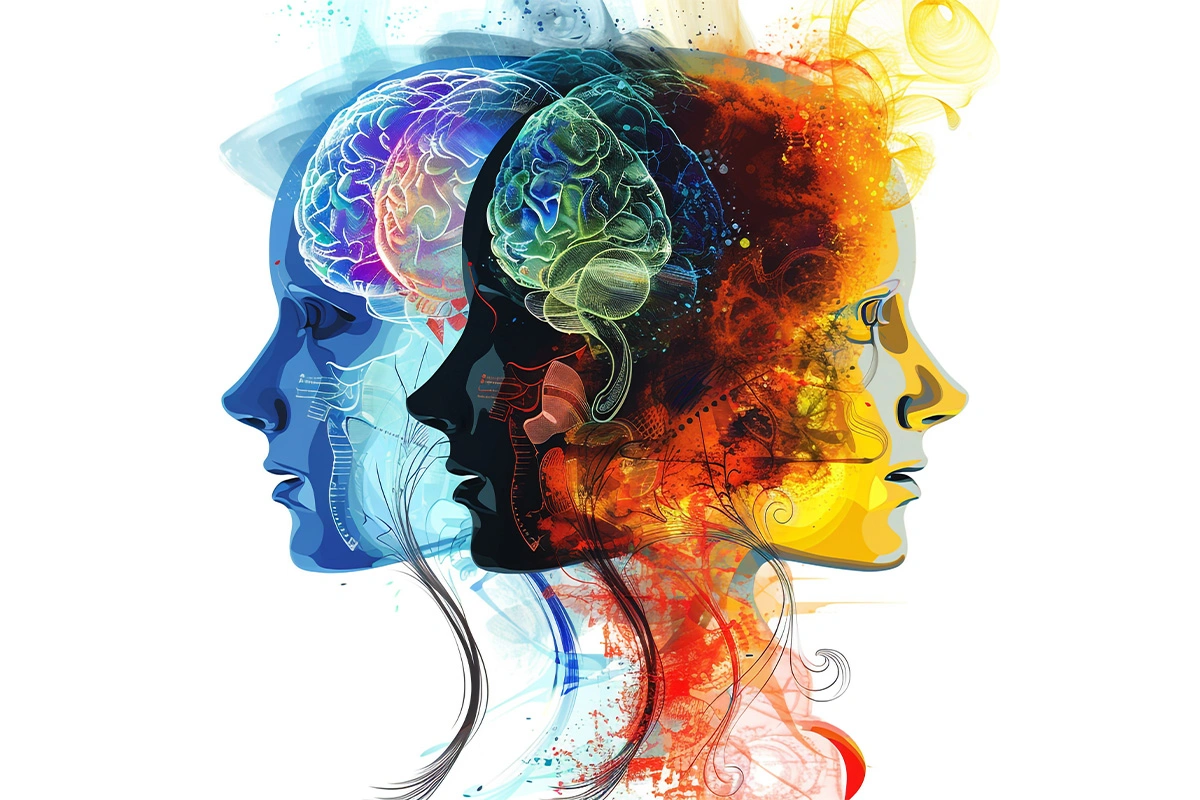
6 Powerful Psychological Affects You Experience Every Day
The effects of exercise on mental health are undeniable, but when it comes to severe mental health disorders, people often get confused and unsure whether exercise can help improve mental health conditions. Although exercise is not a replacement for professional support. But it can reduce the symptoms and chances of developing the problem. Studies indicate that regular exercise can help reduce the symptoms of depression, stress and anxiety, as well as sleep disorders. The effect of exercise on mental health has proven results that give clinically proven benefits in treating mental health disorders.
1. The Pratfall Effect – Why Imperfections Make You More Likable
The Pratfall Effect explains the idea that people often become more likable after showing a small flaw. As an example, let’s imagine a popular influencer who always posts flawless, picture-perfect content. Then one day, they share a behind-the-scenes blooper where they forget their lines or burst out laughing. In such situations, their audience doesn’t judge; instead, they adore it. That tiny imperfection makes them seem genuine and human.
Psychologist Elliot Aronson is the person who discovered this effect. As per his research, he suggested that small mistakes make people appear more authentic and relatable. Even though neuroscience supports this thought, too.
2. The Pygmalion Effect - How Expectations Shape Performance
The Pygmalion Effect explains the idea that people tend to live up (or down) to the expectations others have of them. Like if we motivate someone by simple words,” I know you can do it”, it can completely boost someone’s confidence. Let’s look at an example: when a parent consistently uses positive reinforcement and believes in their child’s abilities, that child is more likely to perform better. The same happens in the workplace: if your boss genuinely believes in your potential, you’ll likely push yourself harder to meet or even exceed their expectations.
This effect was demonstrated by Psychologist Robert Rosenthal in a famous classroom study, showing that students performed better when teachers believed they would. It’s a reminder that belief itself can be a powerful motivator. When others see potential in us, we often rise to meet it, and when we do the same for others, we help them shine, too.
3. The Paradox of Choice – When Too Many Options Create Stress
The Paradox of Choice explains that when you have too many choices or options, you get confused about what to choose. Let’s have an example.
Did you ever visit online sites to buy something simple, like a pair of shoes, and end up scrolling for an hour, comparing colors, styles, and reviews? By the time you’re done, you feel drained and can’t decide at all. That’s the Paradox of Choice, when having too many options makes it harder to choose. The same thing happens every morning when you stand in front of a closet full of clothes and still feel like you have nothing to wear. With so many possibilities, your brain struggles to weigh each one, leading to decision fatigue and frustration. Psychologist Barry Schwartz, who popularized this concept, explains that endless choices don’t always bring freedom, but sometimes they often bring stress. So simplifying your options can actually make you feel happier and more in control.
4. The Bystander Effect – Why People Often Fail to Help in Groups
The Bystander Effect explains a psychological phenomenon where the presence of others actually reduces the likelihood that anyone will take action. For better understanding, let’s consider this scenario: you witnessed a situation where someone clearly needed help, yet no one stepped forward, not because they didn’t care, but because everyone else was just watching.
Psychologists John Darley and Bibb Latane, who first studied this effect, found that in larger groups, people tend to diffuse responsibility – thinking, “If no one else is reacting, maybe it’s not that serious.” The result? Everyone waits, and no one acts. Understanding this helps us become more aware – so the next time you see someone in need, remember that your small step forward might be the one that makes a real difference.
5. The Spotlight Effect – The Overestimation of How Much Others Notice You
The Spotlight Effect shows our brain’s tendency, that how our brain believes others are paying much more attention to our flaws than they really are. For understanding these effects, let’s imagine a scenario where you trip slightly while entering a meeting or stumble over a few words during a presentation. You might feel awkward and replay that moment in your head for hours, and might think about how those who witnessed this may judge you. But in reality, the situation is not as awkward as you are imagining it. Most of the time, people are engaged and too focused on themselves to even remember such an incident.
So, the next time you feel like all eyes are on you – take a breath. Chances are, no one’s paying as much attention as you think. The spotlight effect reminds us that we often overestimate how much others notice our mistakes.
6. The Focusing Effect – When One Detail Clouds the Whole Picture
The Focusing Effect is when we give too much importance to one factor while ignoring the bigger picture.
Again, imagine a real-life example, guests are here at your place as you have invited them for a perfect get-together and dinner. At the table, everyone loves the food, except one friend who says the pizza was “too spicy”. So instead of remembering all the beautiful compliments, your mind keeps replaying that one comment that was given by a person who always prefers low-spice food.
This example teaches us that sometimes our mind just zooms in on one detail and ignores everything else. So by recognizing this effect, we can see things more clearly and fairly.
How Everyday Life Shapes Psychological Effects
Our thoughts and emotions aren’t just shaped by what’s happening inside the brain; they’re deeply influenced by the everyday experiences around us. Psychological effects can be seen in every aspect of life. For example, the psychological effects of poor sleep can affect your quick decision-making ability. On the other hand, it also increases emotional reactivity. Similarly, the psychological effects of social media addiction may fuel anxiety. Psychological effects of loneliness and social isolation can quietly affect brain health and motivation. Over time, the psychological effects of losing social connections over time or the psychological effects of living away from family can create emotional distance and fatigue. Together, these experiences show how powerfully the brain responds to changes in connection, rest, and emotional balance.

How Mid Cities Psychiatry Can Help You Understand and Manage These Effects
At Mid Cities Psychiatry, our team understands that recognizing these psychological effects is the beginning of learning different psychological patterns. Our clinic offers personalized therapy, psychological evaluations, and mental support to help you regain emotional balance and clarity. So if you ever feel stress, anxiety, self-doubt, or any mood changes, connect with our team to strengthen your mental well-being. You will feel good here as every session is built around empathy, trust, and evidence-based care. So if you or your loved one has been feeling overwhelmed or emotionally drained, reach out to Mid Cities Psychiatry. We’re here to help you feel like yourself again.
Frequently Asked Questions
Absolutely. Sometimes, looking for perfectionism in everything, overthinking, and having low confidence can affect your emotional well-being. By recognizing these effects, you can manage reactions and develop better coping skills.
Yes, Therapy is an incredible tool that helps in treating such psychological effects. Always consult a trained therapist, as they help you recognize these psychological patterns. Also, they understand the root cause and replace it with healthier ways of thinking.
Yes. Psychological effects are well-researched in psychology and neuroscience, with decades of studies explaining how our brain processes emotions, decisions, and behavior. As discussed above, many researchers have worked on different effects.
Conclusion
After a brief discussion of psychological effects, it’s clear that there is a strong connection between the brain with behavior. Our brain is an incredible organ that is complex, emotional, and sometimes biased. The way our brain works makes human psychology so interesting. So it’s important to understand the psychological effects, as through this, you will gain insight into your decisions, relationships, and emotions. Awareness gives you the power to respond thoughtfully rather than react automatically. So the next time you catch yourself overthinking a mistake, feeling judged, or stuck between too many options, just pause and take a deep breath.
Revision History
Author

Dr. Sacha Cohen
Medical & Clinical Educator
Dr. Sacha Cohen is a healthcare professional and medical content writer with experience in clinical training and academic writing. She specializes in creating research-based, accessible healthcare content. With a foundation in medical education and hands-on clinical practice, she brings depth and clarity to every piece she writes. Passionate about making medical knowledge understandable, she aims to educate and inspire her readers.

Dr. Kazi, Seema
Dr Seema Kazi is a board-certified psychiatrist and a proficient Medical Director of Mid Cities Psychiatry at Euless, Texas.
Fact Checker

Dr. Seema Kazi
Founder & Medical Director
Dr. Seema Kazi is the compassionate force behind Mid Cities Psychiatry, where her vision has shaped a practice rooted in empathy, excellence, and patient-centered care. As a triple board-certified psychiatrist in Psychiatry, Geriatric Psychiatry, and Internal Medicine, Dr. Kazi brings over 20 years of clinical experience to her leadership role.